
Next-Generation Vision Protection
for Your Children
Routine eye exams are a key part of maintaining ocular health and clear vision for people of all ages. Having an eye doctor examine your children’s eyes is the most effective way to learn about vision problems and eye diseases before they can cause severe or permanent consequences and take steps to correct these issues.
At Thompson Rivers Family Optometry, we take a proactive, detail-oriented approach to children’s eye health and vision. Many eye problems can appear early in life, ranging from minor discomfort to severe health risks. Our team is standing by to provide your family with effective help for all of them.
Book your child’s eye exam with us today.
When Does My Child
Need an Eye Exam?
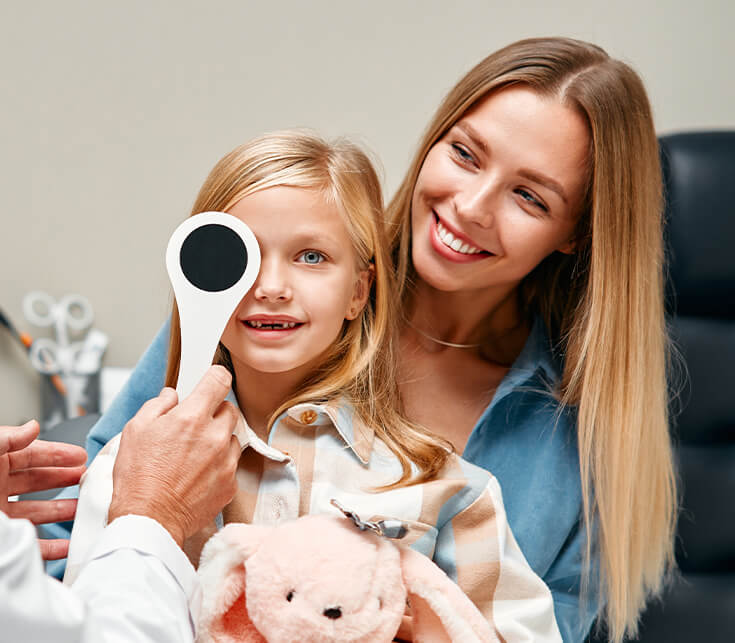
We follow the Canadian Association of Optometrists’ recommendations, beginning our eye exams with children as young as 6 months old. The recommended frequency includes:
- Their first exam between 6 and 9 months old
- A second eye exam for children between 2 and 5 years old
- Annual eye exams after children begin school
The Medical Services Plan (MSP) covers annual eye exams for children 18 and younger.
Why Are Children’s Eye Exams Important?
Children are rapidly growing, learning, and developing throughout their childhood. Their vision is an important part of this learning and development. Since 80% of classroom learning is visual, having clear and functional vision is imperative for academic success. Vision is also necessary for developing skills such as hand-eye coordination, depth perception, and spatial awareness.
Many children can’t express their vision difficulties because they don’t have an understanding of what clear vision should look like. Additionally, vision problems that relate to depth perception, eye coordination, and eye focusing may not be caught in a vision screening or sight test, necessitating a comprehensive eye exam by an optometrist.
At Thompson Rivers Family Optometry, we perform a thorough evaluation of their visual clarity and their visual development to make sure that their vision is clear, functional, and comfortable. If we detect signs of vision problems, we’ll discuss our findings with you and recommend next steps for treatment.
The earlier we detect and diagnose vision problems in children, the easier and more effectively we can treat them.
What Happens During a Child’s Eye Exam?
A child’s eye exam is similar to an adult’s exam, with a few different tests to check visual development. Our eye doctors are experienced in working with children and can help your child feel at ease during their exam.
Our children’s eye exams include:
- A series of questions about your child’s medical history and family medical history, so we can learn about potential risks to their eye health or vision.
- Tests to measure your child’s visual acuity (how well they can see at various distances), binocular vision (how well their eyes work together), refraction (whether they have nearsightedness, farsightedness, or astigmatism), and general eye health.
- Recommendations and prescriptions for vision correction (including glasses and contact lenses) or medication that your child needs.
- Tips and strategies to help you and your child maintain their eye health.
- Opportunities to raise any other concerns you or your child may have about their vision or eye health.
Remember to bring your child’s current glasses or contact lenses to their eye exam if they have them. When we need to update these devices, it’s easier to have the originals on hand for reference.
Signs Your Child May Have a Vision Problem
Often, children lack the vocabulary or understanding of clear vision necessary to express their vision problems. However, you may notice signs that could indicate your child is experiencing discomfort or blurry vision. If you notice any of the following signs, be sure to bring your child in for a comprehensive eye exam:
- Squinting
- Excessive blinking or eye rubbing
- Tilting or turning their head
- Covering or closing one eye to see
- Tearing, red, itchy, or burning eyes
- Frequent complaints of headaches or tired eyes
- Holding objects, such as books or tablets, close to their face
- Poor attention span or dislike of near work (examples: reading, writing, homework, colouring, or Lego)
Sometimes, children with vision problems exhibit symptoms similar to ADHD, dyslexia, and other learning or behavioural conditions. If this vision problem goes undetected, they may be misdiagnosed with another condition. Treating a vision error can also make treatment or tutoring more effective for children with both vision problems and another condition.
The Healthy Eyes and Clear Vision
Your Child Deserves
Routine eye exams during childhood promote health, safety, and long-term success. By supporting their eye health now, you can promote healthy visual development, detect and treat any vision errors, and support their success in academics, sports, and other activities.
At Thompson Rivers Family Optometry, our team provides your child with the eye care they need today so they can enjoy healthy eyes and vision well into the future.
Is your child due for an eye exam? Please book an appointment for them today.


Finding
Our Clinic
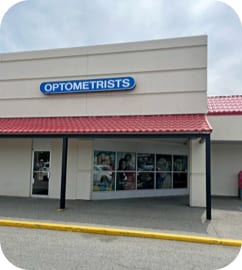
We’re located in the Northills Shopping Centre off Tranquille Road. Find our office between the CIBC and the Interior Health clinic on the north side of the mall. For your convenience, our entrance is directly accessible from the parking lot—no mall entry required.


Visit
Our Location
Our eye clinic is conveniently located at the Northills Shopping Centre, next to the CIBC.
Where to Park?
The mall offers spacious parking and accessible parking spaces.
Hours of Operation
*Closed between 12:00 PM and 1:00 PM every day for lunch
Our Google
Reviews
Our Featured
Eyewear Brands





Our Patient
Education Hub
Land
Acknowledgement
We’re grateful to live and work on Tk’emlúps te Secwépemc territory, within the unceded ancestral lands of the Secwepemcúĺecw. We acknowledge and respect the history, language, and culture of the Secwépemc people who have lived here since time immemorial. We make this acknowledgement as an act of reconciliation.

About Us
Services
Specialty Eye Exams
Patient Education Hub
Thompson Rivers Family Optometry
- 250-376-1985
- 250-376-1309
- office@trfo.ca